

If you’ve ever received a text that just said “id,” you’ve probably paused and wondered what your friend was trying to say. Is it a typo? Slang? Something deeper? You’re not alone — “ID” is one of the most misunderstood short forms in modern texting, and its meaning changes completely depending on where you see it.
This guide breaks down every common meaning of ID in texting, social media, gaming, and even formal writing — so you never have to guess again.
What Does ID Mean in Text?
In most everyday texting, “id” is a lowercase, autocorrect-friendly way of typing “I’d,” which is short for “I would” or “I had.” People often skip the apostrophe because it’s faster to type, and phones frequently drop it automatically.
Example: “id go if I had time” simply means “I’d go if I had time.”
Outside of texting slang, ID can also stand for identification, such as a driver’s license or student card, or refer to the Freudian “id,” a psychology term for our instinctual desires.
Quick Definition
ID in text usually means “I’d” (I would/I had). It can also mean identification, an identity document, or a personal identifier, depending on context.
Simple Meaning of ID (Easy Explanation)
Think of “id” as a shortcut. Just like “u” replaces “you” and “rn” replaces “right now,” lowercase “id” replaces “I’d.” Because most phone keyboards auto-capitalize and add apostrophes, some users deliberately turn autocorrect off for a cleaner, more casual look — and “I’d” naturally becomes “id.”
Where is ID Used?
ID shows up across almost every digital platform, but its meaning shifts slightly based on where you find it.
Text Messages
In SMS and messaging apps like WhatsApp or iMessage, “id” almost always replaces “I’d.” Example: “id rather stay home tonight.”
Social Media Comments
On platforms like Twitter/X or Facebook, ID can mean “I’d” in casual replies, but it may also refer to someone’s user ID or profile handle in a comment thread.
Snapchat & Instagram
Here, “ID” often pops up when someone shares their Snap ID or Instagram ID to add a new friend. Example: “Drop your ID, let’s connect.”
Gaming Chats
In gaming communities, ID usually refers to a player ID, lobby ID, or match ID used to identify accounts or game sessions. Example: “Send your game ID so I can add you.”
Professional Context (Different Meaning)
In workplace or official settings, ID almost always means identification — a passport, employee badge, or verification document required for access or security purposes.
Why Do People Use ID?
1. Faster Typing
Dropping the apostrophe saves a keystroke and speeds up casual conversations.
2. Casual Communication
Lowercase, informal spellings feel relaxed and match the tone of everyday chatting.
3. Mobile Keyboard Convenience
Some keyboards auto-correct “id” to “I’d,” but many users disable this feature for a more casual texting style.
4. Matches Online Language
Text slang evolves to mirror how people naturally speak — quick, informal, and abbreviated.
Real-Life Examples of ID With Meaning
- “id love that” → “I’d love that”
- “id already left if you told me” → “I’d already left if you told me”
- “drop your snap id” → Share your Snapchat username/ID
- “can I see your id please” → Show your identification
- “id never do that” → “I’d never do that”
Example 1
“honestly id rather sleep in tomorrow” — meaning “I’d rather sleep in.”
Example 2
“id say we leave by 8” — meaning “I’d say we leave by 8.”
Example 3
“What’s your game ID?” — asking for a player identification number.
Example 4
“Security asked for my ID at the gate” — referring to a physical identification card.
Example 5
“id text her back if I were you” — meaning “I’d text her back.”
ID Mean in Text vs Similar Terms
| Term | Meaning |
| ID | “I’d” (I would/I had) or identification |
| IDK | I don’t know |
| IDC | I don’t care |
| IDM | Varies by context (often “I don’t mind”) |
| I’d | Formal spelling of “I would/I had” |
Easy Trick to Remember
If the sentence still makes sense when you replace “id” with “I would” or “I had,” it’s the texting shortcut. If it’s followed by a noun like “card” or “number,” it’s identification.
When Should You Use ID?
Good Situations
- Casual texts with friends or family
- Informal social media replies
- Group chats where slang is common
Avoid Using ID Here
- Professional emails or workplace messages
- Academic writing or formal essays
- Situations where clarity matters more than speed
ID Meaning in Text Citation
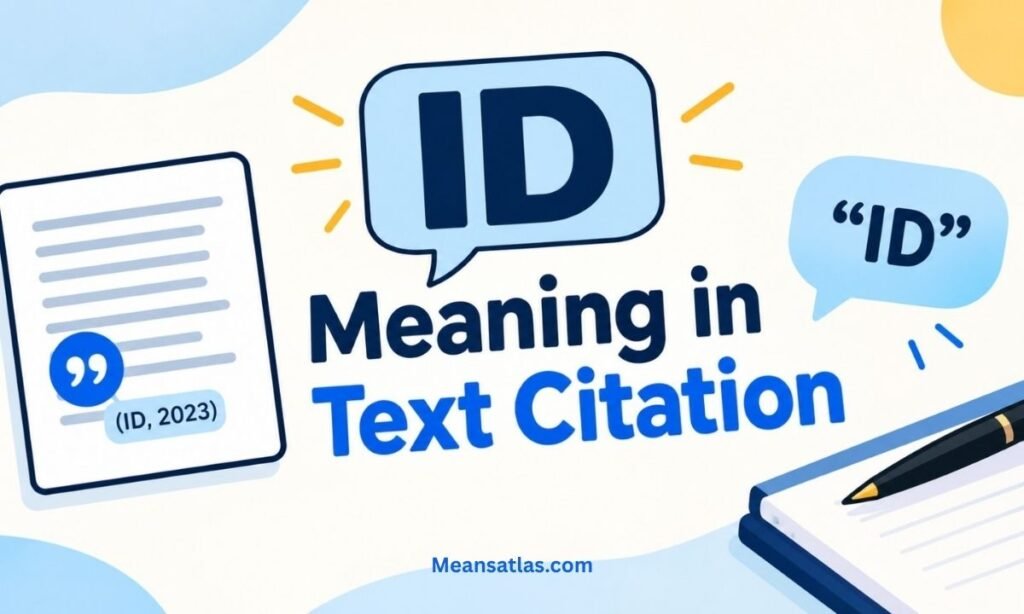
In academic writing and citations, “id.” (short for the Latin “idem,” meaning “the same”) indicates that a reference comes from the same source cited immediately before it. This is common in legal writing and footnoted research papers.
ID Meaning in Text from a Boy
When a guy texts “id,” it typically carries the same meaning as anyone else’s usage — short for “I’d.” Context matters most here: “id do anything for you” is a romantic or affectionate statement, while “id rather not” is simply a casual opinion.
ID Meaning in Psychology
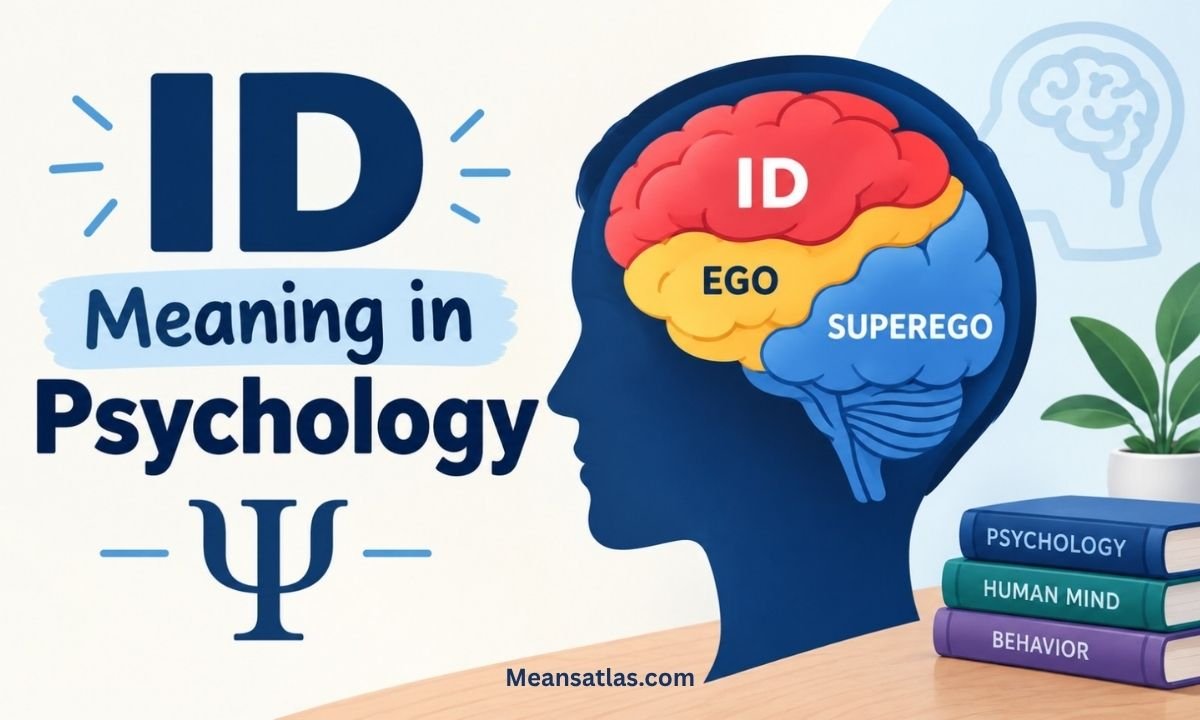
In psychology, particularly Freudian theory, the “id” represents the most primitive part of the human personality — driven by instinct, desire, and immediate gratification, without regard for consequences or social norms.
ID Meaning in Footnotes
In footnotes and endnotes, “Id.” is used to reference the same source as the previous citation, saving space and avoiding repetition of the full citation details.
ID Meaning in Law
In legal documents, “Id.” functions the same way as in academic citations — referring back to the immediately preceding case, statute, or source without rewriting it in full.
Common Misunderstandings About ID
Myth 1: ID Always Means Identification
False. In texting, it almost always stands for “I’d,” not a physical ID card.
Myth 2: ID Is Incorrect English
Not exactly — it’s an intentional stylistic shortcut, not a grammar mistake.
Myth 3: ID Means IDK
These are different. IDK means “I don’t know,” while ID typically means “I’d.”
Myth 4: Capital Letters Change Meaning
Not necessarily — “ID” in all caps usually still refers to identification, while lowercase “id” leans toward “I’d” in casual texts.
Pro Tips for Using ID Naturally
Read the Full Sentence
Context almost always reveals whether ID means “I’d” or “identification.”
Check Context
Look at the platform — gaming and social apps often mean a username or account number.
Do Not Use It Everywhere
Save it for casual conversations, not professional communication.
Match Your Audience
Younger, informal audience understand texting shortcuts better than formal ones.
Other Popular Text Slang Related to ID
- IDK – I don’t know
- IDC – I don’t care
- ID10T – Playful tech slang for user error
- ID’d – Asked to show identification
- OOTD – Outfit of the day (unrelated but often confused visually)
Frequently Asked Questions
What does “id” mean from a girl in texting?
It usually means “I’d,” just like it does for anyone else — context decides the exact meaning.
Is “id” the same as “I’d”?
Yes, in casual texting, “id” is simply “I’d” without the apostrophe.
What does ID mean on Snapchat?
It typically refers to a Snapchat username used to add someone as a friend.
What does ID mean in gaming?
It usually refers to a player or account identification number.
Why don’t people use an apostrophe in “id”?
Many disable autocorrect or prefer a faster, minimalist typing style.
Does ID mean identification in every context?
No — its meaning depends heavily on the platform and surrounding words.
Conclusion
The meaning of “ID” in text truly depends on context. Most of the time in casual chats, it’s simply a quick way of writing “I’d.” On social media and gaming platforms, it often refers to a username or identification number, while in professional and legal writing, it can mean an actual ID document or the citation shorthand “id.” Once you understand the platform and sentence structure, decoding this small but versatile term becomes second nature.

John Marvel is a passionate writer with a strong interest in the meanings of words, phrases, slang, and everyday expressions.
He enjoys researching language and sharing his knowledge to help people understand confusing terms more easily.
His goal is to provide simple, clear, and useful explanations that readers can easily understand and apply.
Through MeansAtlas.com, John shares helpful language insights to make learning and communication easier for everyone.