
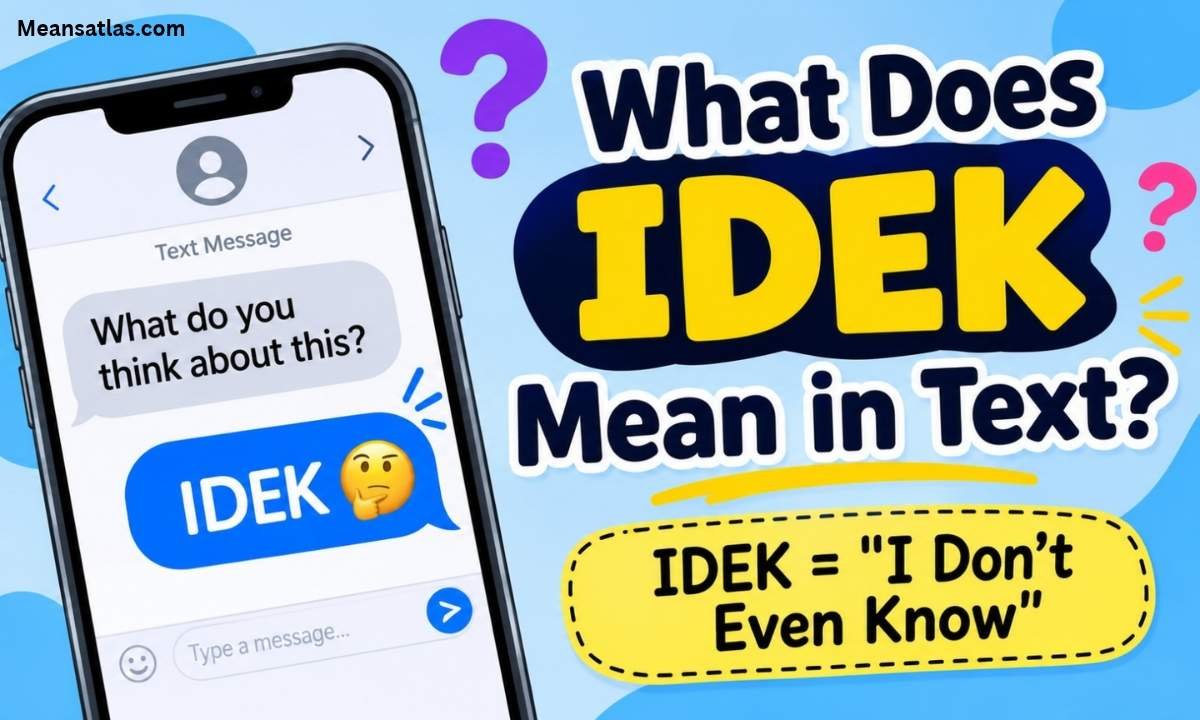
IDEK means “I don’t even know.” People type it when they are confused, stuck, or too surprised to explain. It is a close cousin of IDK (“I don’t know”), but it carries more feeling. This guide covers the meaning, real examples, tone, platform habits, and better alternatives, so you can read it correctly and use it with confidence.
Why You’re Probably Looking This Up
You likely got a message that said “idek” and weren’t sure how to read it. Maybe it was a crush, a friend, or a stranger’s comment.
The confusion is fair. The word looks like IDK with one extra letter. That extra letter changes the mood.
Here is what most people want to know:
- What the letters stand for
- Whether the person is annoyed, joking, or just lost
- How to reply without sounding awkward
What It Actually Means in Real Life
IDEK = I don’t even know. Dictionary.com describes it as an acronym from texting and social media that shows pure puzzlement about something that seems impossible to explain.
The key word is “even.” It tells the reader the speaker has gone past simple uncertainty. They are overwhelmed, amused, or out of words.
- IDK (I don’t know): Neutral, plain uncertainty
- IDEK (I don’t even know): Confusion, disbelief, or being overwhelmed
- IDC (I don’t care): Dismissive, can sound cold
- IDRK (I don’t really know): Soft, hesitant uncertainty
The term has been around social media since at least the mid-2010s. It often appears as a hashtag at the end of a post, as in a puzzled tweet about a viral audio clip.
How People Use It in Everyday Situations
Most uses fall into three groups.
- Real confusion. “Idek how this app works.”
- Overwhelm. “Idek where to start with this essay.”
- Playful shrug. “Idek, I might just stay home.”
It works as a full reply or as a sentence opener. It usually sits in lowercase, which makes it feel relaxed.
IDEK Meaning in Text from a Girl
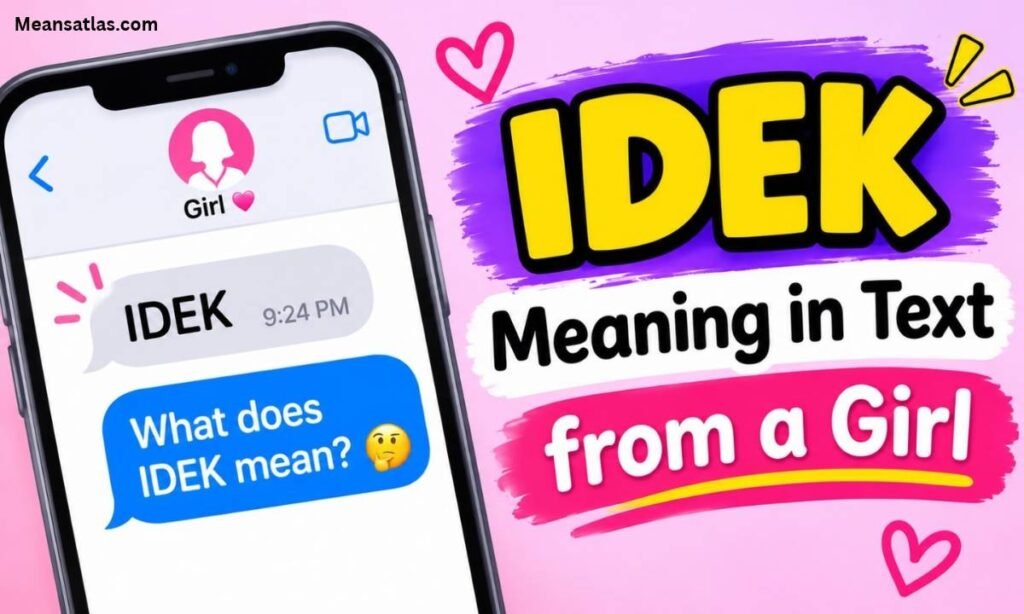
When a girl texts “idek,” the meaning depends on the topic.
- About plans: She is undecided and open to ideas. Suggest something specific.
- About feelings: She may be sorting out her thoughts. Give her space, then check in gently.
- After a joke or story: She is amused or stunned. Treat it as a reaction, not a problem.
Tone hints matter more than the acronym. An emoji, a laugh, or a follow-up question usually shows she is relaxed. A one-word reply after a serious topic may signal she needs time.
What Does IDEK Mean on Snapchat?
On Snapchat, IDEK keeps its normal meaning: “I don’t even know.” Dexerto notes that it shows up in direct messages, snap captions, and stories, and that it often signals confusion, disbelief, or light frustration.
Snapchat’s quick, disappearing style suits short slang. A snap of a messy room with the caption “idek where to begin” is a typical example.
IDEK Meaning TikTok
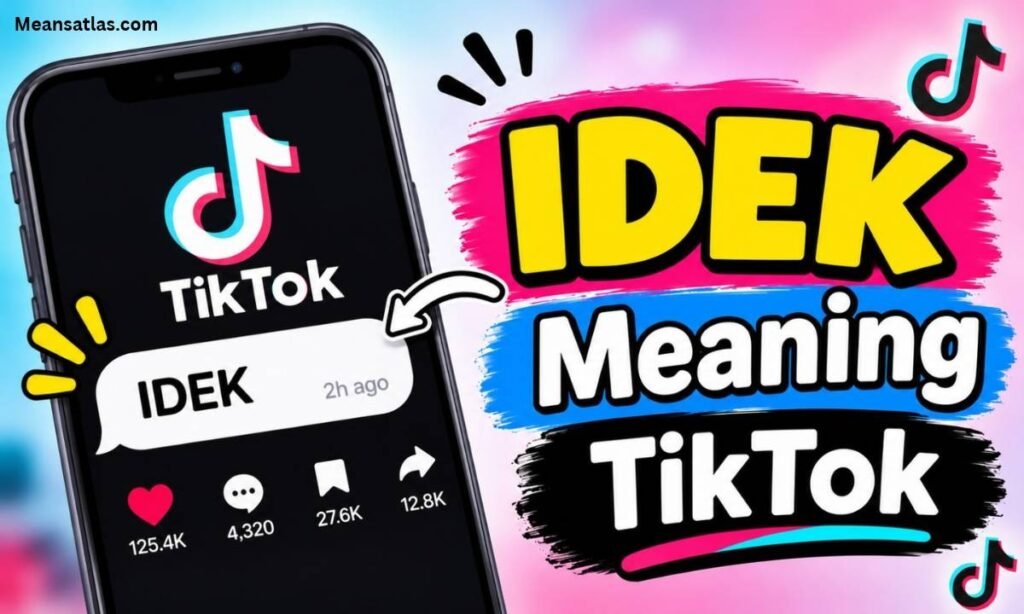
On TikTok, IDEK appears in captions, comments, and replies. It often reacts to odd trends, confusing videos, or relatable chaos.
Common comment styles:
- “idek what I just watched”
- “idek why this is so accurate”
- “idek how they did that”
Here it usually reads as amused disbelief, not irritation.
IDEK Meaning in Text from a Guy
The meaning is the same, but context shapes how you read it.
- Casual chat: He is unsure and going with the flow.
- Answering “what’s wrong?”He may not have words for it yet.
- Dodging a question: It can be a soft way to avoid a direct answer.
Don’t over-read a single text. Look at the pattern. If he is warm and engaged otherwise, “idek” is just a shrug in text form.
Tone & Context
Text strips out voice and facial cues, so small details change the message.
- “idek lol” or “idek 😭”: Playful, amused
- “idek.” (with a period): Flat, tired, or a little annoyed
- “IDEK” in capitals: Strong frustration or emphasis
- “idek, what do you think?”: Open, inviting input
The relationship counts too. Between close friends, it is harmless. From a boss or a stranger in a heated chat, it can feel dismissive.
When You Should NOT Use This Term
Skip IDEK in these situations:
- Work emails and client messages. It reads as unprofessional.
- School assignments and formal writing. Slang lowers credibility.
- Serious or emotional conversations. It can sound like you don’t care.
- Talking with people unfamiliar with slang. Older relatives may not understand it.
- Customer support. Clear answers build trust.
If you need to admit uncertainty at work, say “I’m not sure yet; I’ll find out and get back to you.”
Natural Alternatives
- Casual: IDK, no clue, beats me, who knows
- Playful: I’m lost, honestly no idea, don’t ask me
- Overwhelmed: I can’t even, my brain is fried, I’m speechless
- Professional: I’m not certain, I’ll need to check, I don’t have that information yet
- Gentle: I’m still figuring it out; I need a minute to think
Pick the one that matches both your mood and your audience.
Real-Life Examples
Friend chat
“Where do you want to eat?” “idek, I’m starving, but nothing sounds good.”
Group project
“idek how we’re supposed to finish this by Friday.”
Reacting to news
“They cancelled the show again?? idek anymore.”
Social post caption
“Woke up, forgot what day it is, idek.”
Dating chat
“idek what to wear tonight, help.”
Notice the pattern. Each message shows a mix of confusion and ease, and none asks for a formal answer.
Platform or Culture Notes
- Snapchat and WhatsApp: Very common in quick personal chats.
- TikTok and Instagram: Popular in captions and comments, often with emojis.
- X (Twitter): Frequently used as a hashtag after a confused or ironic post.
- Gen Z and younger millennials: The main users. Many older adults only know IDK.
- Lowercase habit: Online culture favors lowercase for a casual, unbothered feel.
Like most slang, it shifts by community. Meaning stays stable, but tone can change from group to group.
Common Misunderstandings
- “It means the same as IDK.” Close, but IDEK adds emotion.
- “It’s always rude.” Usually it isn’t. It is more often playful or tired.
- “It means I don’t care.” That’s IDC. IDEK is about confusion, not indifference.
- “It stands for something else.” The “E” is “even.” Some low-quality sites invent other meanings, so check reliable dictionary sources.
- “It always signals a problem.” Often it is just a shrug.
Frequently Asked Questions
What does IDEK stand for?
It stands for “I don’t even know.” It shows confusion, surprise, or being overwhelmed.
Is IDEK the same as IDK?
Not exactly. IDK is plain uncertainty, while IDEK adds a stronger emotional push.
Is IDEK rude?
Usually not. It can sound dismissive in serious talks or formal settings.
How do I reply to IDEK?
Match the mood. Offer a suggestion, ask a simple question, or send a light reaction.
Can I use IDEK at work?
It’s best avoided. Use a clear phrase like “I’m not sure yet” instead.
Do I capitalize IDEK?
Lowercase is the norm for casual chat. Capitals add emphasis and can read as frustration.
Is IDEK used on every platform?
Mostly yes. You’ll see it on Snapchat, TikTok, Instagram, WhatsApp, and X.
Conclusions
IDEK means “I don’t even know,” and that small word “even” makes it more expressive than IDK. It signals confusion, overwhelm, or a playful shrug.
Read the tone, the punctuation, and the relationship before deciding what someone means. Use it freely with friends and online, but switch to clear language in professional settings.

John Marvel is a passionate writer with a strong interest in the meanings of words, phrases, slang, and everyday expressions.
He enjoys researching language and sharing his knowledge to help people understand confusing terms more easily.
His goal is to provide simple, clear, and useful explanations that readers can easily understand and apply.
Through MeansAtlas.com, John shares helpful language insights to make learning and communication easier for everyone.